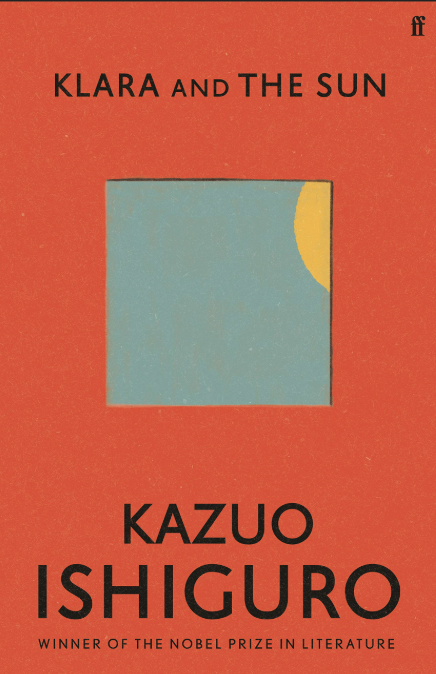

Klara and the Sun
By Kazuo Ishiguro
In Klara and the Sun, Kazuo Ishiguro returns with a haunting, tender fable that probes the boundaries of consciousness, devotion, and what it means to be human.
Narrated by Klara, a solar-powered “Artificial Friend” (AF) designed to accompany children, the novel unfolds through her innocent, observant lens as she’s purchased to care for Josie, a chronically ill teenager in a near-future society shaped by genetic enhancement and social stratification.
Klara’s voice is deceptively simple – precise, curious, and reverent towards the Sun, which she believes holds healing powers. Her devotion to Josie and her family is unwavering, even as she struggles to understand the complexities of human emotion, grief, and moral ambiguity. Ishiguro masterfully uses Klara’s limited perspective to reveal the emotional undercurrents of the world around her; a mothers desperate love, a friend’s quiet yearning, and a society’s quiet cruelty toward those deemed ‘unlifted’ or obsolete.
Klara’s hope in the sun’s power is infectious. Though she lacks human emotion, her unwavering belief in the healing power of the Sun and her quiet optimism ripple outwards, touching Josie, Rick and even Josie’s parents. Klara becomes a kind of spiritual anchor – her faith in the sun grows from a simple observation in her days at the store to completing an appointed quest in the Sun’s name to win Josie’s healing.
Klara’s selflessness is profound. In what feels like an uncomfortable acknowledgement of Klara’s place in society and programming, Klara is willing to erase any semblance of consciousness or individuality she may possess in order to become Josie, should Josie die. This act – both chilling and tender – raises questions about identity, sacrifice and the limits of artificial empathy.
What makes Klara and the Sun so affecting is it’s restraint. Like Never Let Me Go, it doesn’t shout its dystopia – it whispers it. The world is eerily familiar, with “interaction meetings” replacing school, and children’s futures determined by their genetic upgrades. Yet Klara, in her innocence and devotion, becomes one of his most haunting creations: a being who may not feel, but who makes us feel deeply.
Leave a Reply